WASHINMURA
Washinmura and Boso: a three-day private-vehicle tour
A three-day trip with airport or Tokyo transfers, a private vehicle and butler, two nights and four meals. Compare prices, accommodation, routes and booking conditions.
The trip and where you stay
Three days in Boso by private vehicle
This three-day, two-night trip uses Washinmura as a base for exploring the coast and countryside of the Boso Peninsula. A private vehicle and butler accompany your group for all three days, from pickup at Narita Airport, Haneda Airport or a location in Tokyo to your final drop-off. Leave the driving and route planning to us, and take your time over dinner in the village and moments near the cats.
This is a paid travel package including transfers, a private vehicle, an accompanying staff member and two nights with four meals. Its price and arrangements are separate from our suggested itineraries for independent one-night or two-night trips.
Three accommodation choices
The base price uses a nearby partner glamping property. Our published guide introduces Mother Farm Glamping and Grandome Chiba Futtsu. Let us know which facilities and room arrangements you would like, and we will check availability.
Choose Washinmura’s main property for an extra ¥5,000 per person. Its six rooms span four types: the roughly 200-year-old Kominka farmhouse, the Nagayamon “Tsubaki” gatehouse, the Jyubako cabin designed by Kengo Kuma with Snow Peak, and Nordic tents by Nordisk.
Ichijukaku is a CLT treehouse by our sister brand, treeavel, built among five living cedar trees and equipped with its own outdoor bath. It costs an additional ¥10,000 per person and is arranged through a booking allocation separate from the main property. The outdoor bath belongs to Ichijukaku.
Choosing facilities at partner properties
Mother Farm Glamping has THE FARM and Green Base areas. It offers free Mother Farm admission and parking for overnight guests, along with activities such as meeting alpacas and making butter. Check the eligible dates and activities for your chosen area.
Grandome Chiba Futtsu has 20 units across six types. Dark-water hot springs and private pools are provided in selected villas, while sauna and other facilities vary by room type. It also features seven complimentary market-style offerings, including vegetables, drinks, smoking ingredients and spices. We check whether a room with your preferred facilities is available when quoting.
Both dinners are at Washinmura
Both dinners are served at Washinmura. If you stay at the main property, you have breakfast and dinner in the village. If you stay at a partner glamping property, staff take you back there after dinner at Washinmura, and you have breakfast at your accommodation the next morning.
Village meals include the experience of lighting your own charcoal BBQ, cooking rice in an iron pot, and making toasted sandwiches and hand-ground coffee. In winter, the guide also offers Taiwanese hot pot as an optional addition and hot pot around a wood stove. Confirm the menu for your accommodation, dates and chosen plan.
Please discuss vegetarian meals or food allergies before booking. We will ask about your needs and check which menu arrangements are possible.
Three days in Boso
Day 1: Umihotaru, Nokogiriyama and Washinmura
This is the standard itinerary. We adjust it to your pickup location and time, traffic, weather and attraction opening conditions. Times are a guide for planning.
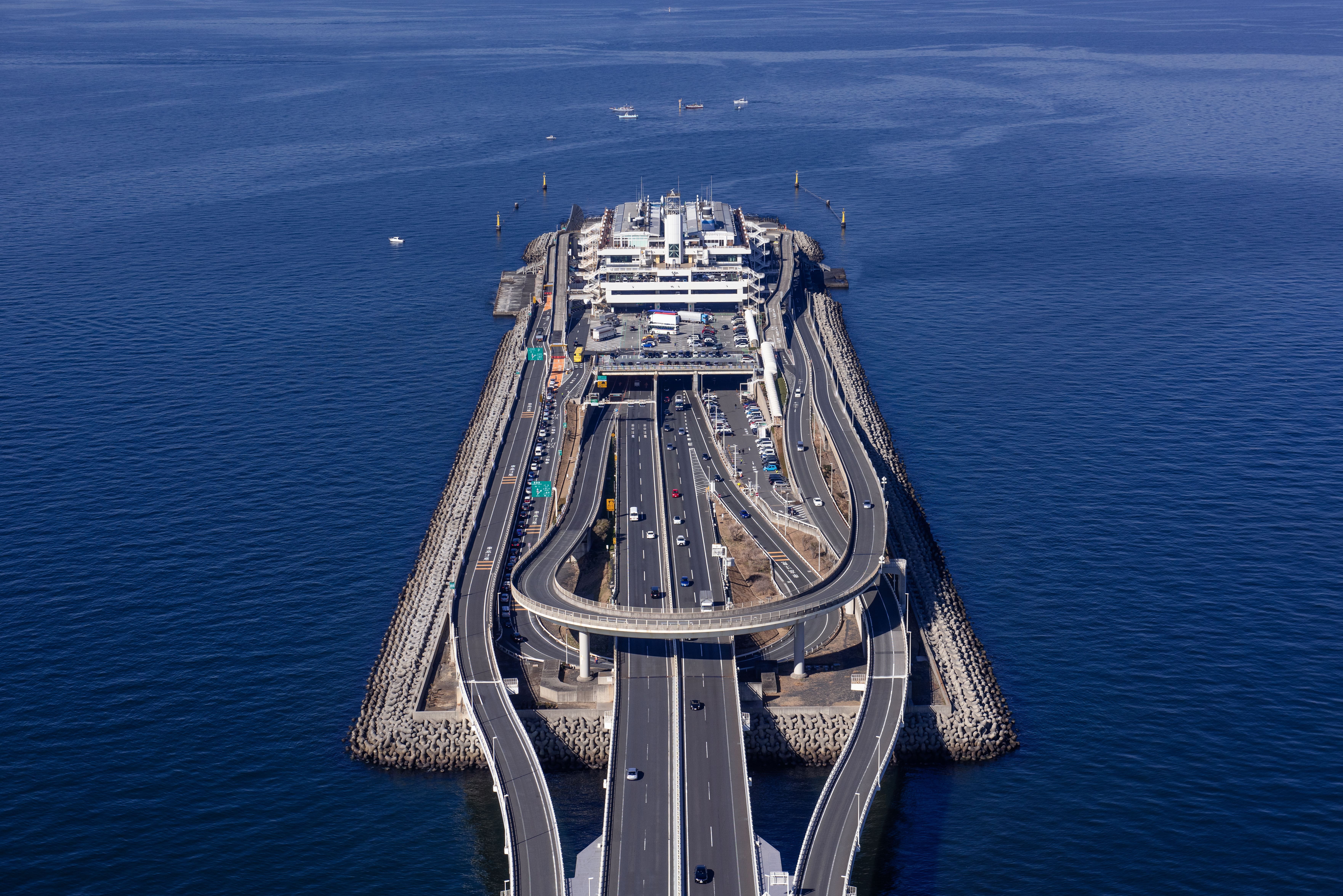
Around 10:30, stop at Umihotaru on the Tokyo Bay Aqua-Line for sea views and facilities such as its footbath. Around 13:00, visit Nokogiriyama, including the Jigoku Nozoki lookout and Nihonji Temple’s approximately 31-metre Great Buddha. There are steps and walking sections, so wear comfortable walking shoes.
Around 17:00, arrive at Washinmura for dinner in the countryside, time around the fire and a chance to share the village with its cats, before settling into your chosen accommodation.
Day 2, coastal route: the shores of southern Boso
For Day 2, choose either the coastal route or the mountain route. Your butler and private vehicle accompany you for the full day.
On the coastal route, visit Kamogawa Sea World in the morning, planning around that day’s marine-animal performances, including the orcas. Around midday, take a small boat to Niemonjima and walk with views of the Pacific. In the evening, visit the wooden Okamoto Pier, which extends out to sea; Mount Fuji may be visible on a clear day. Stops and order may change with boat operations and weather.
Day 2, mountain route: a cave, a farm and a valley
Start early at Nomizo Falls and Kameiwa Cave to see the light and its reflection on the water. The heart-shaped reflection appears only when the season, time and weather align.
Spend midday at Mother Farm, with sheep, capybaras and seasonal flower fields. Food such as grilled dishes and soft-serve ice cream can be chosen from the day’s park offerings. In the afternoon, visit Awamata Falls in the Yoro Valley for a walk through the seasonal scenery, from autumn leaves to summer waterside greenery. Walking distances depend on footing and any access restrictions.
Day 3: a former school, shopping and the cape
Around 10:30, visit Hota Shogakko roadside station, which reuses a school with a 126-year history. Browse shops and crafts and enjoy the atmosphere of the former school buildings.
Around 14:00, stop at Mitsui Outlet Park Kisarazu for Japanese and international brands and places to eat. Kisarapia, with its Ferris wheel, is next door. Around 17:30, head to Cape Futtsu and the Meiji Centennial Observation Tower for views of Tokyo Bay, with a chance of sunset and Mount Fuji if the weather allows.
We then take you to the airport or your specified location in Tokyo. We will discuss the final day’s stop order and departure time around your flight or onward plans.
50 stops to discuss when planning your trip
These are the options introduced by the tour website, not a list of stops all included in the standard three-day route. They extend from Boso to northern Chiba, so the plan depends on your pickup and drop-off points, travel time and interests. Confirm admission, activity and meal charges, dates and conditions when requesting a quote.
- Umihotaru — sea views, a footbath, shops and a break on Tokyo Bay.
- Nokogiriyama and Jigoku Nozoki — a rocky lookout over Tokyo Bay, with Mount Fuji on clear days.
- Nihonji Temple — a Nara-period temple and an approximately 31-metre stone Great Buddha.
- Nomizo Falls and Kameiwa Cave — light through a cave and reflections that change with the season and time.
- Kamogawa Sea World — marine-animal performances; bring a light raincoat for splashes.
- Mother Farm — seasonal flowers, animals, milking and rides; check activity times that day.
- Hota Shogakko roadside station — a former school with Kyonan Rakuichi shops and Satoyama Shokudo.
- Mitsui Outlet Park Kisarazu — shopping and dining; check each shop’s tax-free conditions.
- Cape Futtsu — the Meiji Centennial Observation Tower and views of Tokyo Bay, Mount Fuji and sunset.
- Kisarapia — rides beside the outlet mall; check holiday and New Year opening hours.
- Kanozan Kujukutani View Park — layered valleys, with mist possible on suitable autumn mornings.
- Lake Kameyama — lakeside walks and autumn colours.
- Tokyo German Village — a park in the hills of Sodegaura, with seasonal illuminations.
- Sakuma Dam — lakeside narcissi and cherry blossoms; check event dates.
- Niemonjima — a small-boat crossing and Pacific views; check boat operations.
- Tai-no-Ura sightseeing cruise — approximately 25 minutes; check sailings and sea conditions.
- Tanjoji Temple — a temple at the birthplace of Nichiren.
- Lua Cheia — a Kamogawa castella workshop using Chiba eggs and Japanese flour.
- Bel Cheia — introduced as a cake shop near Nokogiriyama.
- Umenoya — soy-sauce-based Takeoka-style ramen.
- Suzuya — Takeoka-style ramen with thick slices of chashu pork.
- The Fish — dining with Tokyo Bay and Nokogiriyama views, plus Boso gifts.
- Bayside Kanaya LA MER — a restaurant overlooking Tokyo Bay with regional ingredients.
- Yubune Sodegaura — hot springs, heated-stone relaxation and dining.
- Seaside hot springs — a possible bathing stop; confirm the property and access conditions when arranging the trip.
- Kameyama’s dark-water hot springs — check bathing and dining arrangements with the chosen property.
- KURKKU FIELDS — farming, food and art, including the Library in the Earth.
- A honey and mead workshop — a stop to learn about honey and honey wine.
- A seafood market — grilled seafood and local produce; choose the market with your itinerary.
- Iioka Lighthouse — views of Kujukuri Beach and the Pacific from Cape Gyobu.
- Ubara Utopia — a scenic walk along Katsuura’s indented coastline.
- Moriya Beach — white sand and sea views; check tide and access information around Watashima.
- Inubosaki Lighthouse — Choshi’s landmark; check tower access and opening times.
- Inage Seaside Park — a Tokyo Bay park with a pool, BBQ facilities and an art museum.
- Nojimazaki Lighthouse — a historic lighthouse at the southern tip of Boso.
- Oyama Senmaida — terraced rice fields; check dates for illumination events.
- Chokoji Temple — known for its weeping cherry tree; timing depends on the year’s blossoms.
- Sakura Samurai Residences — the former Kawara, Tajima and Takei homes.
- Sawara — the “Little Edo” townscape and old merchant buildings along the Ono River.
- Boso no Mura — a museum recreating Edo-to-Meiji town and rural life with hands-on activities.
- Ino Tadataka Museum — surveying tools, diaries and maps, with his former home nearby.
- Akayama Underground Tunnels — wartime tunnels in Tateyama; follow the designated route and footing guidance.
- Daifukuji and Gake Kannon — a hall on a cliff face; check visiting hours.
- Nagoji Temple — wooden architecture, carving and seasonal temple grounds.
- Sunosaki Lighthouse — a lighthouse and sea views on Boso’s west coast; follow local access guidance.
- Okamoto, or Haraoka, Pier — a wooden pier, evening light and possible Mount Fuji views.
- Katsuura Underwater Park — descend the spiral stairs of the underwater observation tower.
- Tomiura Biwa Club — regional shopping and seasonal strawberry and loquat picking information.
- Tokyo Bay Ferry, Kanaya Port — roughly 40 minutes to Kurihama, with vehicle boarding available.
- Yoro Valley and Awamata Falls — waterside scenery and autumn colours; check events and trail conditions.
Village time and seasonal activities
Cats, dogs, goats and silkie chickens share the village, where you can light a fire or make coffee at your own pace. Plans depend on the animals’ health and mood, the season and the weather. Encounters with cats, including visits to your room, are not guaranteed.
These are the 25 activities listed in the official tour guide. Some are seasonal, need a reservation or cost extra. We check dates, locations, booking requirements and charges when arranging your trip.
- Time with cats: the cats live freely in the village and may visit guest rooms. Let them decide whether to come near.
- Walk with Waka and Kirin: walks with these large dogs are offered after check-out. Check the arrangements with staff that day.
- Watch the goats and silkie chickens calmly in their own living areas.
- Cook your own charcoal BBQ using the prepared meat, seafood and vegetables. Check your booking plan for the menu.
- Cook rice with pre-washed rice and a marked iron pot.
- Make toasted sandwiches and freshly ground coffee for breakfast. The tour guide also lists salad, yogurt, eggs and apple juice; the menu is confirmed for your accommodation.
- Taiwanese hot pot is an optional extra available in winter.
- Hot pot by a wood stove is another winter dinner option.
- The unattended shop is open 24 hours, selling beer, wine, snacks, dog treats and fireworks. PayPay is accepted.
- Campfires can be enjoyed around the clock, with fire pits, wood-splitting equipment and firelighters provided. Keep quiet after 21:00 and follow the on-site fire-safety instructions.
- Try splitting firewood, checking the instructions before using the heavy hammer.
- Walk through the woods and look for stars on clear nights.
- Handheld fireworks can be bought at the shop and used in the designated areas.
- Cool off by a nearby stream. Ask staff about the location and conditions that day.
- Dig bamboo shoots in spring; tools are lent free of charge.
- Pick persimmons from the village trees in autumn.
- Try lighting a fire with a fire starter.
- Grind the beans and brew a cup of pour-over coffee.
- Fly a kite; kites are free to borrow. Check which part of the open space may be used.
- Play badminton or catch with family and friends in the open space.
- Reserve a wood-fired sauna session with löyly and time to rest outdoors in a chair.
- Wild fireflies: viewing takes place only during a short period each year. The tour guide lists a staff-led outing at 20:00; check that year’s notice for dates and meeting time.
- Relax beneath a kotatsu in winter, with a mikan orange at hand.
- Watch the tiny, drifting “snow insects” that mark the arrival of winter.
- Combine spring bamboo-shoot digging with blossom viewing when the season allows.
Village activity charges
The tour activity guide lists time with cats, dog walks, watching goats and silkie chickens, woodland walks and stargazing, stream visits, bamboo-shoot digging, persimmon picking, fire starting, the coffee set, kite flying, badminton, catch, snow-insect watching and blossom viewing as free. Bamboo-digging tools and kites are also free to borrow.
BBQ, rice cooking, breakfast, campfires, wood splitting and winter kotatsu use are listed as included with accommodation. Sauna use is also included but requires a reservation. The main property’s general rules include one free 45-minute session and charge for extra sessions, so confirm how many sessions your tour arrangements cover.
Taiwanese hot pot and wood-stove hot pot are additional winter plans. Pay separately for shop purchases and handheld fireworks. Keep BBQ ingredients indoors or in the fridge so animals cannot take them. Follow the main property’s designated smoking-area rules.
Activities through the seasons
The guide suggests bamboo shoots and blossoms in March–May, fireflies in June–July, BBQ, sea bathing, stream visits and fireworks in August, autumn leaves and persimmons in November, and kotatsu, snow insects and wood-stove hot pot in December–February. Timing and activities depend on natural conditions.
Check the current year’s information for firefly dates and participation details. Previous seasonal benefits are preserved separately in the archive below; offers such as the former 10% discount are not included in the current tour price.
Prices and what is included
Prices by group size and accommodation
All prices are in Japanese yen and are starting prices per person. The base price includes accommodation at a nearby partner glamping property. Tell us your group size, dates and preferred accommodation, and we will quote the total for your group.
Four people is our recommended group size. For five or more, please enquire in advance so we can check vehicles and rooms. Children are charged under the tour’s pricing rules; include their ages when asking for a quote.
- Group of 2
- From ¥150,000 per person
- Group of 3
- From ¥120,000 per person
- Group of 4
- From ¥100,000 per person
- Choose Washinmura’s main property
- Add ¥5,000 per person to the base price
- Choose the Ichijukaku CLT treehouse
- Add ¥10,000 per person to the base price
What the price includes
- Return transfers to Narita or Haneda Airport, with pickup and drop-off at a specified location in Tokyo available instead.
- A private vehicle for all three days, reserved for your group and driven by your butler.
- A butler accompanying your group for all three days to guide you and help with arrangements.
- Two nights and four meals: both dinners at Washinmura, with breakfast at your accommodation.
- Help choosing and arranging lunch stops. You pay the cost of your lunch.
Costs paid separately
Lunch on all three days, flights, travel insurance and personal shopping are not included. Selecting Washinmura’s main property or Ichijukaku adds the accommodation supplement shown above.
Please check how admission fees and paid activities are handled when requesting your quote. Confirm the itinerary, accommodation, optional additions and total price before booking.
Preparation and booking terms
Before you travel
Children are welcome. Tell us their ages, your preferred room and whether anyone in the group has concerns about stairs. Loft stairs are steep and need particular care with children and older guests.
We send a packing list before departure. Bring personal toiletries and shoes for walking outdoors. We will explain the towels, coffee, BBQ equipment, Wi-Fi and other facilities provided for your accommodation and plan.
Some roads into the village are narrow; low-clearance cars need care. Insects may enter rooms. Check how to use the water heater and other room equipment at check-in. Mobile reception can be weak in places, so use the Wi-Fi connection information provided.
Cats move freely around the village and may be less visible in summer. If you have a cat allergy or do not want cats entering your room, speak with us before booking. This is an environment where animals live, so complete separation from cats cannot be guaranteed. Guests may not bring pets.
Staff adjust the itinerary to the weather when it rains. Check the current year’s information for fireflies and other seasonal activities. Please also enquire in advance if you would like shopping advice or help buying supplies.
Deposit, cancellation and date changes for this tour
These conditions apply to this tour with a private vehicle. They differ from ordinary Washinmura accommodation and from the historical travel offer archived below. A non-refundable deposit of 30% of the price is due when your booking is confirmed.
You may change your dates once free of charge up to 30 days before the stay; the change is valid for one year. Later date changes are treated as cancellation and a new booking. For events such as a typhoon or a cancelled flight, please contact us with supporting documents. A refund or waiver is not automatic.
- 30 days or more before the stay
- Cancellation charge: 30% of the price
- 29–15 days before
- Cancellation charge: 50%
- 14–8 days before
- Cancellation charge: 80%
- Within 7 days, or a no-show without notice
- Cancellation charge: 100%
Tell us your dates and group size
Enquire or book by LINE, the official tour website’s form or email. Include your name, dates, group size, children’s ages, preferred accommodation and pickup and drop-off locations. Staff reply directly on LINE; the tour form states a reply time of within 24 hours.
You can contact us in Japanese, English or Taiwanese Mandarin. Individual travellers can use LINE or the form; travel companies should use the dedicated B2B enquiry channel.
Travel trade and group enquiries
The travel-trade channel accepts enquiries for groups needing up to around 50–60 rooms across partner properties. This is not the room count of Washinmura itself. If the main property is full, we can discuss partner accommodation while arranging dedicated staff and charter vehicles.
The team can discuss quotes based on group size, weekday or weekend dates and the three accommodation grades, along with custom itineraries, commission arrangements, promotional photographs and copy, product briefings and itinerary templates. Support is available in Chinese, English and Japanese.
The original B2B page marks downloadable price PDFs and online availability enquiries as “in preparation.” Please contact the team directly for current prices, availability and materials.
Past travel offers and seasonal notices
The following records describe earlier Taiwan-dollar travel products and seasonal programmes. Their prices, inclusions and sales terms differ from the current yen-priced tour above. Past prices and offers do not apply to new bookings.
Read the archived details and terms
The information below is historical
This archive preserves earlier travel offers and seasonal notices. It records the former “Six Good Journeys” offer, including Taiwan-dollar prices, self-drive and charter arrangements, membership, NFT and sales-agent conditions, followed by a previous seasonal firefly notice. It is not an invitation to book, buy or claim those benefits now.
It is a different offer from the current yen-priced three-day tour above. The prices, children’s charges, cancellation terms, meal supplements and NFT benefits below do not apply to today’s tour or ordinary accommodation bookings.
Former Taiwan-dollar prices
The former two-night, three-day offer had a self-drive option and a charter option with a Chinese-speaking guide. These were starting prices per person in New Taiwan dollars (TWD), with a note that exchange-rate differences could apply.
- Self-drive, 4 people
- From TWD 18,000 per person
- Self-drive, 3 people
- From TWD 20,000 per person
- Self-drive, 2 people
- From TWD 23,000 per person
- Charter, 4 people
- From TWD 22,000 per person
- Charter, 3 people
- From TWD 25,000 per person
- Charter, 2 people
- From TWD 30,000 per person
Former accommodation, meals and itinerary structure
The offer included two nights at Washinmura, choosing among four accommodation types with dedicated toilets and shower facilities. The Snow Peak and Kengo Kuma Jyubako was limited to two people; the other choices were the Kominka, Nagayamon and Nordisk Asgard tent.
It included two camp-style breakfasts prepared by guests and two dinners. The guide offered charcoal BBQ or Hida volcanic-lava-stone grilling, and a medicinal-herb twin hot pot with spicy and mild broths. “Premium Japan” and “Champagne and Oysters” were optional additions.
The six themed routes—shopping, animals, beauty, scenery, marine life and water—each filled a day. Completing all six required six days; guests selected three for the former three-day, two-night trip.
The six former routes
- Shopping: Mitsui Outlet Park Kisarazu, Kisarapia’s Ferris wheel, Umihotaru and Boso seafood.
- Animals and flowers: Mother Farm’s animals, flowers, amusement rides, park bus and harvest activities.
- Lake and hot springs: Lake Kameyama, dark-water hot springs, Senju-no-Yu and Nomizo Falls in inland Boso.
- Rocky mountains and the coast: Nokogiriyama, Nihonji’s Great Buddha and Jigoku Nozoki lookout, seafood grilling and Umibe-no-Yu.
- Marine life and a temple: Kamogawa Sea World, coastal hot springs in Kamogawa and Tanjoji Temple, associated with Nichiren.
- Water and traditional crafts: noted spring water, old farmhouses, sake brewing and a soy-sauce brewery described as founded in 1834. The original did not name that brewery.
Former vehicle and transfer conditions
A passenger car with at least five seats was provided for three days, planned for two to four travellers and their luggage. Self-drive bookings allowed return at a different location; charter bookings allowed a different drop-off point, combining Narita Airport, Haneda Airport and Tokyo.
The suggested arrangements were airport to Tokyo at the start of a Japan trip, Tokyo to Tokyo during it, or Tokyo to an airport at the end. Self-drive routes used main roads and motorways, with local support for problems and optional ETC and JAF cards. Charter trips included an experienced Chinese-speaking guide and scope to discuss adjustments along the way.
Former supplements and children’s charges
The former offer charged a supplement starting at TWD 2,000 per person per day when the itinerary fell on a Japanese holiday. Children paid the full trip price because they occupied a vehicle seat and a sleeping place.
Flights were excluded. On self-drive itineraries, hot-spring admission, attraction tickets, meals, ropeways, insurance and other trip expenses were paid separately.
Former cancellation and transfer terms
The former offer allowed free cancellation up to 22 days before the stay, charged 50% from 21 days before and 100% from 7 days before. It also allowed the booking to be transferred to another person free of charge up to 7 days before. These are recorded only as terms of the past Taiwan-dollar offer.
Former membership and NFT proposal
“Travel to Earn” was described as “coming soon.” The guide named Li Yanwei and Lan Zheming as designated guide partners and listed Tesla owners, Starlink owners, holders of American Express Platinum or higher, Star Alliance or oneworld Gold or higher, Marriott Platinum or higher, and Web3/NFT partners.
The proposed qualification process mentioned a website VIP whitelist, obtaining the “Tokyo Locals’ In-Depth Travel NFT,” and a JDT Washinmura NFT. The travel NFT was listed at TWD 2,000, with free minting for partner-NFT holders. The original also linked to the JDT collection.
For bookings of four people, the stated benefit for VIP-whitelist members holding the travel NFT was a free upgrade to “Premium Japan” and “Champagne and Oysters,” valued together at TWD 4,500, on bookings made within one year. Booking the Washinmura trip at least twice within a year would extend eligibility for another year.
Former sales-partner and guide arrangements
The initial sales-partner stage offered the right to sell the trip with a 5% commission. After completing a trip, travellers were to receive a commemorative certificate in digital or NFT form.
The later agency stage listed a 10% commission. It also proposed help obtaining a Japanese guiding qualification, described in the original with the term “添成員.” Holders of the trip certificate were offered a TWD 5,000 reduction in qualification costs. Guide earnings were described as around TWD 10,000 per group, with the ability to drive in Japan required. The formal qualification and scheme cannot be established from that wording, so this is not a current qualification or earnings offer.
Reading this archive
The original also mentioned arrival by helicopter and used promotional claims about premium ingredients and rankings. Those descriptions are part of the old offer, not current service conditions or guarantees of quality or rank. For today’s trip, refer to the yen-priced tour above.
Previous seasonal firefly notice (applicable year unconfirmed)
The tour activity page carried a seasonal notice for outings around early June to early July, led by staff at 20:00. It listed free participation for all overnight guests, late-night soy-milk and mushroom soup, a special rainy-day postcard, and a 10% discount guarantee if no fireflies were seen.
Because the applicable year and dates for any future offer are unconfirmed, this is preserved as a previous seasonal notice. It is not a benefit of the tour currently offered. Check a new seasonal announcement for future arrangements.
Plan the rest of your visit
Before you book
Prices and available plans depend on your dates. Please check the total and booking terms before confirming.
View this page in Japanese →